
Rita Skertich Research Grant
Funding Brain Aneurysm Research in honor of Black, Hispanic and Female Populations

2026 Applications are closed. Awardees to be announced soon!
Brain aneurysms affect 1 in 50 people. Women and those in the Black and Hispanic population are disproportionately affected by brain aneurysms (1.5 to 2 times respectively).
The Rita Skertich Grant is specifically intended to fund research topics that focus on prevention and treatment of brain aneurysms in the Black and Hispanic population and women; the populations most affected by brain aneurysms. African Americans and Hispanics are twice as likely to have a rupture compared to white Americans. Women are more likely than men (3:2 ratio) to have a brain aneurysm and 1.5 times more at risk of rupture than men. The research funded by this grant will support efforts to improve outcomes, accessibility and a greater understanding of discrepancies in the statistics for these populations with a focus on prevention. The preference is that this grant will be given to a Black, Hispanic and/or female researcher with other underrepresented research groups also considered.
Elizabeth Ratta, a brain aneurysm survivor and a Bee Foundation ‘share your story’ contributor is passionate about spreading brain aneurysm awareness and particularly in the populations they disproportionately affect- those who are Black, Hispanic and women. This research grant is named for Elizabeth’s grandma, Rita who had an unruptured brain aneurysm, but at a time when there was limited treatment and support.
CALL FOR APPLICANTS
The Bee Foundation (TBF) invites proposals that further the mission of reducing the number of deaths caused by brain aneurysms. Proposals directed at understanding the early detection, pathophysiology, genetic predisposition, or treatment specifically of the Black, Hispanic and female populations will take priority. Proposals from a variety of disciplines (including but not limited to translational Neurosciences, Neurosurgery, Neurology, Radiology, Genetics) are encouraged and multidisciplinary proposals that illustrate a multi-faceted approach will be weighted highly.
FINANCIAL GRANTS
- $15,000 total amount to be distributed, but not limited to only 1 awarded applicant
- Applicants may request up to $15,000
PROJECT SCOPE & CRITERIA
The purpose of this program is to promote novel approaches to the early detection and prevention of ruptured cerebral aneurysms with an emphasis on benefitting Black, Hispanic and female populations and more specifically uncovering why discrepancies exist in occurrence of aneurysms and rates of rupture in these populations. Applications with more than one investigator must indicate how the different expertise of the co-investigators will contribute to the overall goals of the project.
Funds should specifically be used to benefit the Black, Hispanic and female populations
Funds will be awarded that focus on prevention of brain aneurysm rupture
Funds will be awarded at focusing on the larger public health issue of brain aneurysms affecting these populations disproportionately
Funds should not be requested for honoraria, seminars, or retreats.
APPLICATION GUIDELINES
Priority will be given to those applications with the focus as outlined above. The proposals must contain the following items:
1. Face page with grant title, and names, departmental affiliations, and contact information of the co-investigators.
2. Brief Summary of the project (< 1 page) describing the relevance of the proposed research and how it will advance the field or benefit Black, Hispanic and female patients in regard to brain aneurysm research.
3. Budget in attached format, with a brief (1 page) budget justification.
4. Biosketch of the investigator (or co-Investigators) and any advisors, in NIH format.
5. Scientific proposal, not to exceed three single-spaced pages, including specific aims, background/significance, and experimental design/methods. Preliminary data may be included but are not required. Literature cited and IACUC or IRB information (where applicable) are not included in the three-page limit; regulatory approvals may be pending.
The deadline for receipt of applications is March 1st, 2026. Each application should be submitted as a single PDF file attachment using the form below or emailing to Erin Kreszl, TBF Executive Director, at: info@thebeefoundation.org.
KEY DATES
Posted Date
December 1st, 2025
Application Due Date(s)
March 1st, 2026
Scientific Merit Evaluation*
March 2026
Advisory Council Approval*
April 2026
*Proposals will be evaluated by the TBF Scientific Advisory Board and approved by the TBF Board of Directors.
A Message From Elizabeth Zinno Ratta,
Here is Our Story: In March of 2018 I was diagnosed with a 4mm left MCA (middle cerebral artery) aneurysm after going for a routine physical. My PCP recognized that the terrible headaches I was getting behind my left eye were a symptom of brain aneurysms and she ordered an MRI. I am extremely fortunate since my neurosurgeon said that the aneurysm was so thin, he could see through it and it would have ruptured sooner than later. My grandma had a brain aneurysm in the early 1970s that was discovered after she was having double vision. Her recovery was much different than mine. Her aneurysm was wrapped, she was in the hospital for a month, her recovery at home lasted at least 3 months (or perhaps the rest of her life), her eye was damaged during surgery and she wore a patch for the rest of her life, and she was given such extreme restrictions that she was told not even to iron. My grandma’s name was Rita Skertich and if it were not for her and all she endured, I am convinced I would not be here today.
Since the time of my grandma’s aneurysm, researchers have developed much improved and less invasive treatments, from clipping to coiling and stenting. Research funds are vital and especially so for the Black and Hispanic population, and women. Those in the Black and Hispanic population are twice as likely to have a brain aneurysm rupture compared to whites. Women are more likely than men to have a brain aneurysm (3:2 ratio) and 1.5 times the risk of rupture.
During my graduate school coursework in Public Health and Social Work as well as having worked for AHEC for 7 years in both PA and VT, and as a medical social worker my focus has been on health disparities both in how marginalized groups of people and women are treated in the medical system and in how much research is funded specifically for Black and women’s health. The National Institutes of Health (NIH) reported that from 2000 to 2006 Black applicants were 10 percentage points less likely than whites to be awarded research grants. From 2011-2015 they found that white applicants still received funding at twice the rate of Black applicants. The NIH also revealed that from 2000-2017 women were awarded on average $40,000 less than their male counterparts for their research grants.
The Bee Foundation has long awarded research grants to men and women of all ethnicities. The research grants they award are guided by the science, the guidelines of the grants, and evaluated by the Scientific Advisory Board. The Rita Skertich Research Grant is intended to fund research topics that focus on prevention and treatment of brain aneurysms in the Black and Hispanic population and women in an effort to improve outcomes, accessibility, and a greater understanding of the discrepancies in their statistics. The intention and preference are that the grant will be funded to a Black, Hispanic and/or female researcher. It is imperative to study why the discrepancies exist in why Black and Hispanic people and women have higher rates of aneurysms and ruptures.
I humbly ask for anyone willing and able to donate to please do so. The impact can range from saving a life to drastically improving the lives of people impacted by brain aneurysms. 1 in 50 people are affected by brain aneurysms. Think about all the people you know, all the friends on your social media lists and think about who could be affected.
I am 1 in 50.
In gratitude,
Elizabeth Zinno Ratta MPH, MSW, LICSW
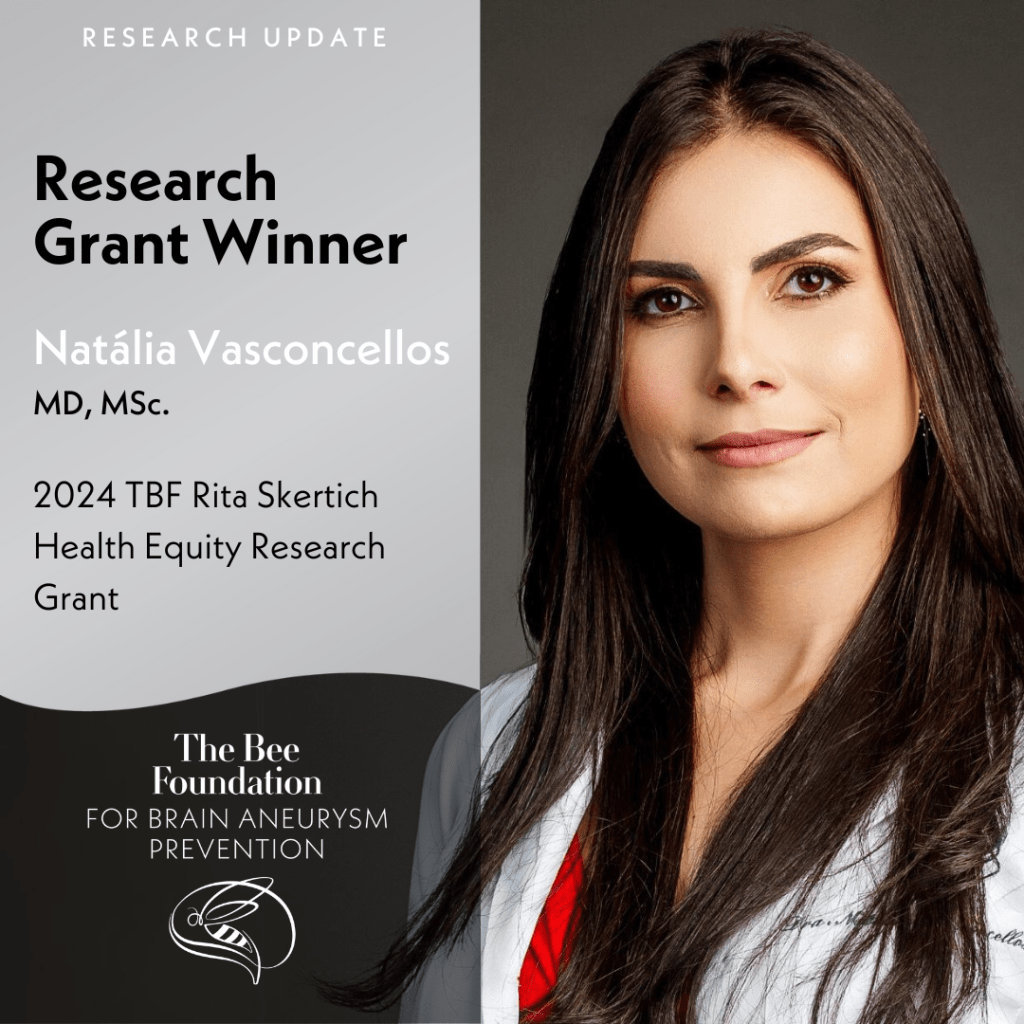
Natalia Vasconcellos, MD, MSc Awarded For “Worldwide Disparities In Aneurysmal Subarachnoid Hemorrhage Risk Factors, Gender, Ethical Groups, Clinical Outcomes, And Mortality: A Multicenter Study”
TBF’s first health equity grant – a milestone in our track record of innovative grant giving – originated with the vision of one woman who wanted to recognize her personal history and ‘pay it forward.’ TBF Ambassador Elizabeth Ratta’s goal was to honor her grandmother, Rita Skertich, who had an aneurysm in the 1970’s at a time when the condition was little understood and treatment options limited. The result: The TBF Rita Skertich Brain Aneurysm Health Equity grant.
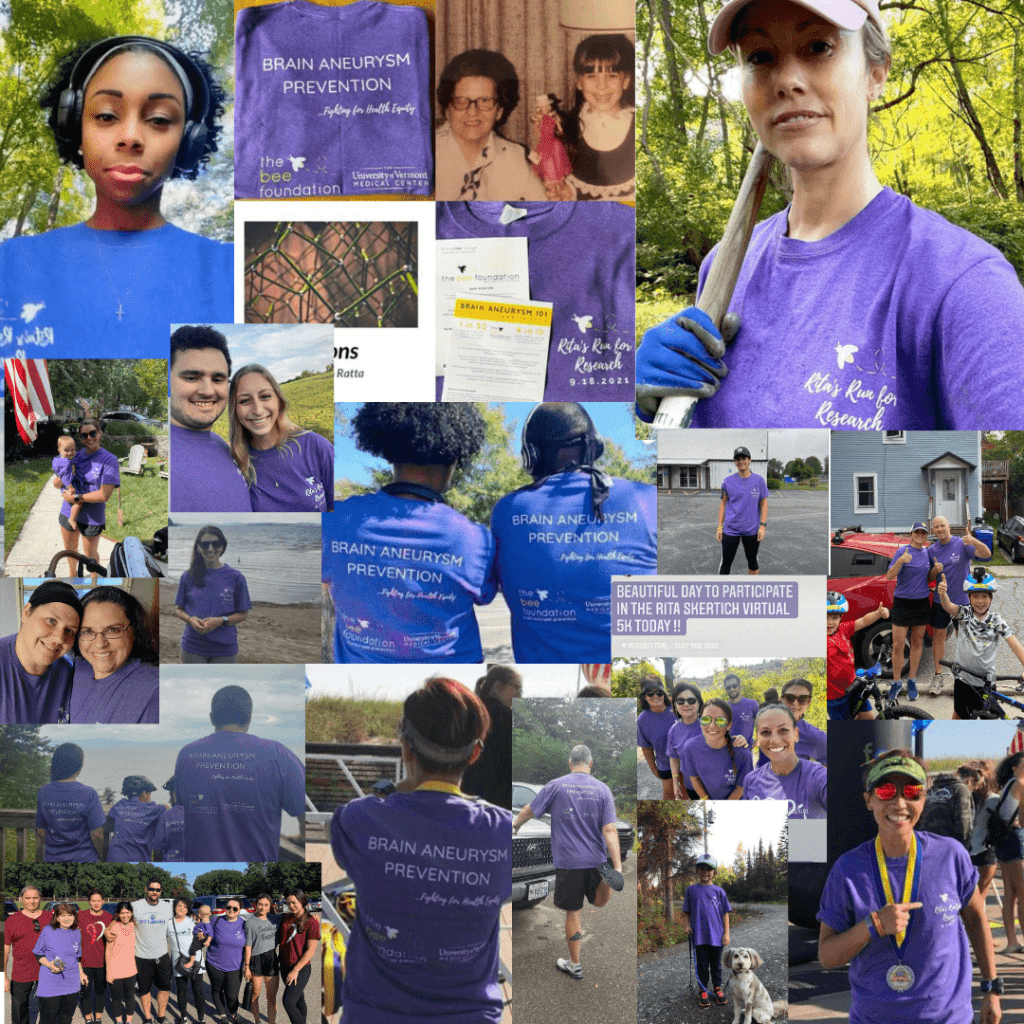
THE RITA SKERTICH VIRTUAL 5K/10K WALK AND RUN, A MESSAGE FROM ELIZABETH RATTA
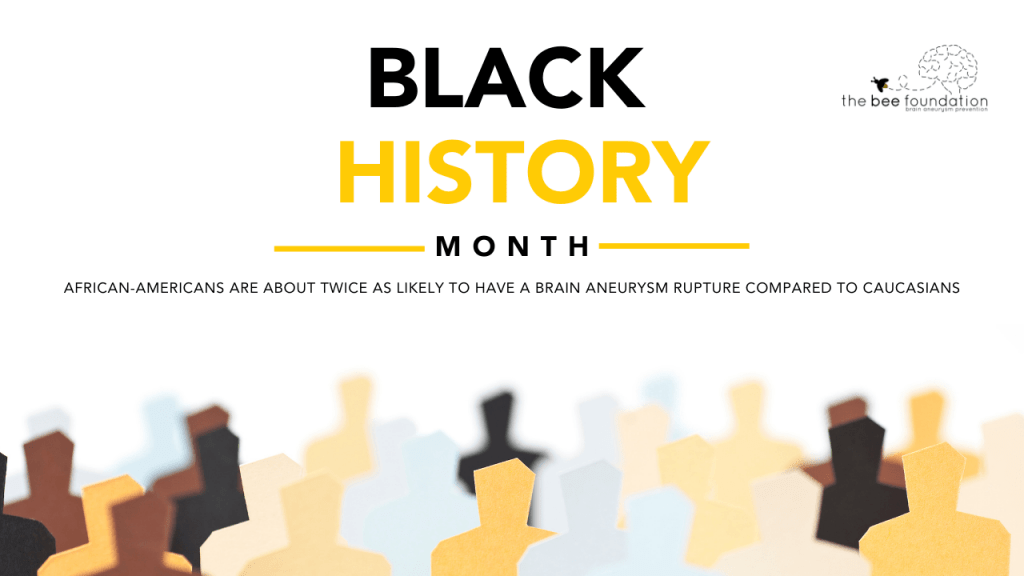
CELEBRATE BLACK HISTORY MONTH BY SUPPORTING THE RITA SKERTICH RESEARCH GRANT
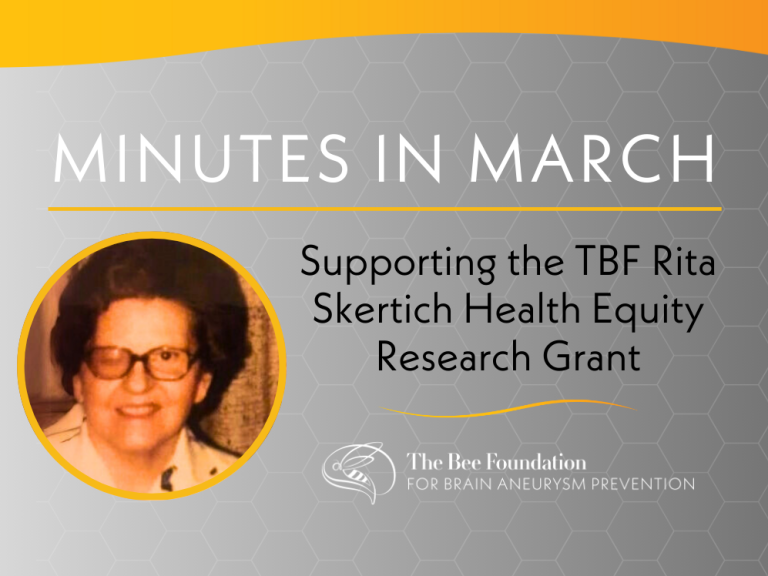
SUPPORTING THE RITA SKERTICH RESEARCH GRANT WITH MINUTES IN MARCH
Join “Minutes In March” TBF Ambassador Elizabeth Ratta is raising money for the TBF Rita Skertich Health Equity Grant. This grant is specifically intended to fund research topics that focus on prevention and treatment of brain aneurysms in the Black and Hispanic population and women: the populations most affected by brain aneurysms. IT’S EASY TO JOIN US WHEREVER YOU ARE!