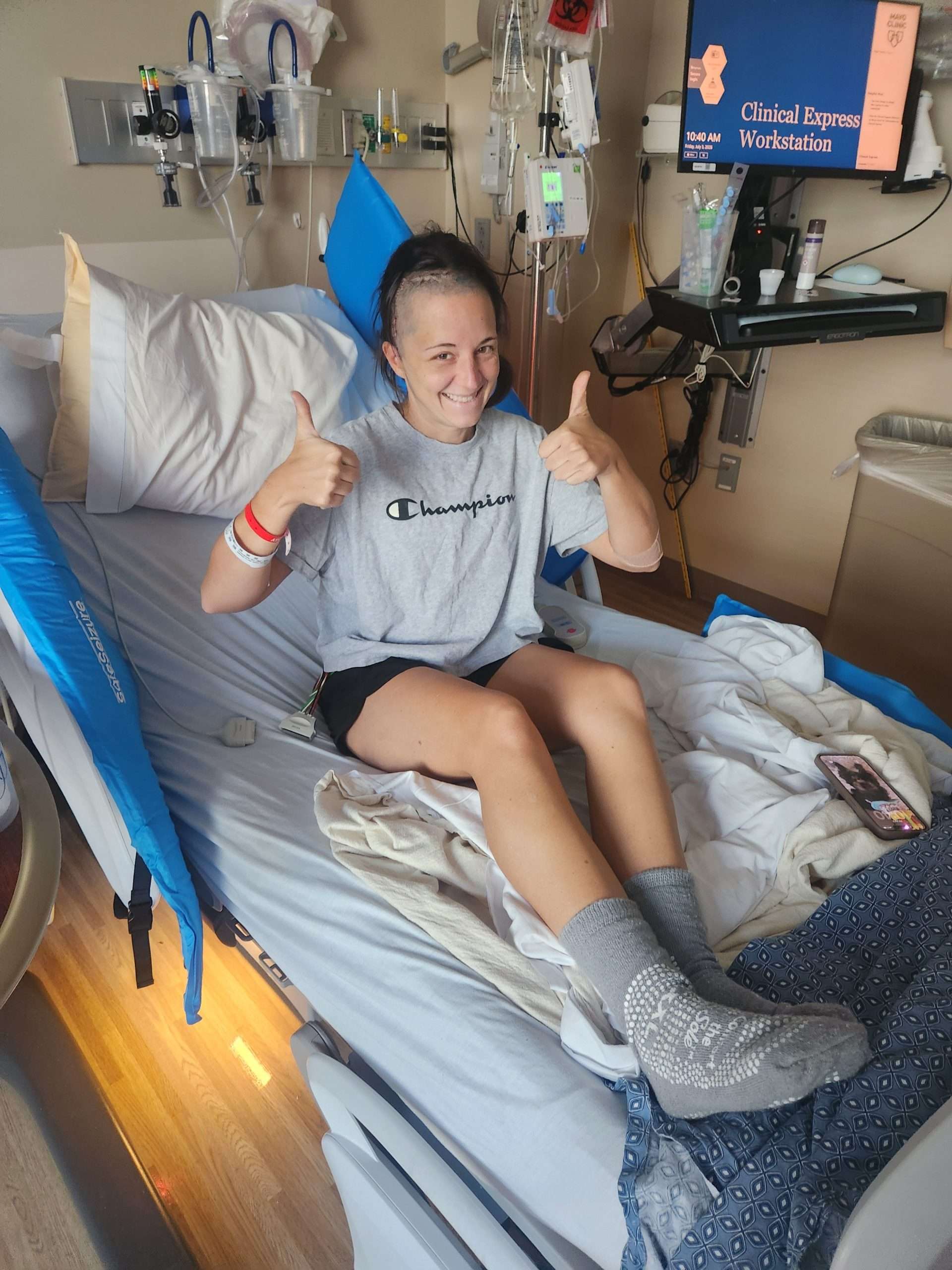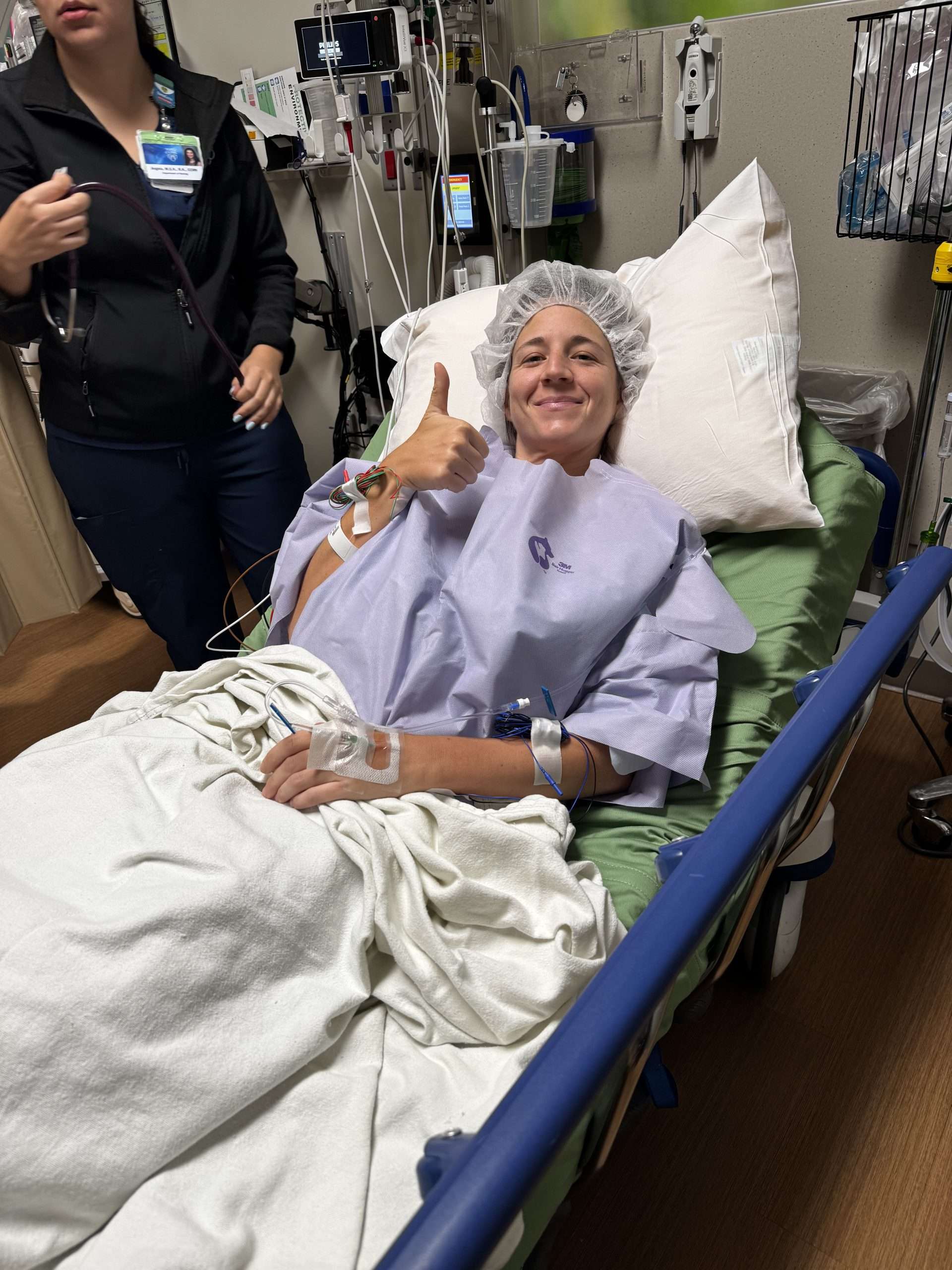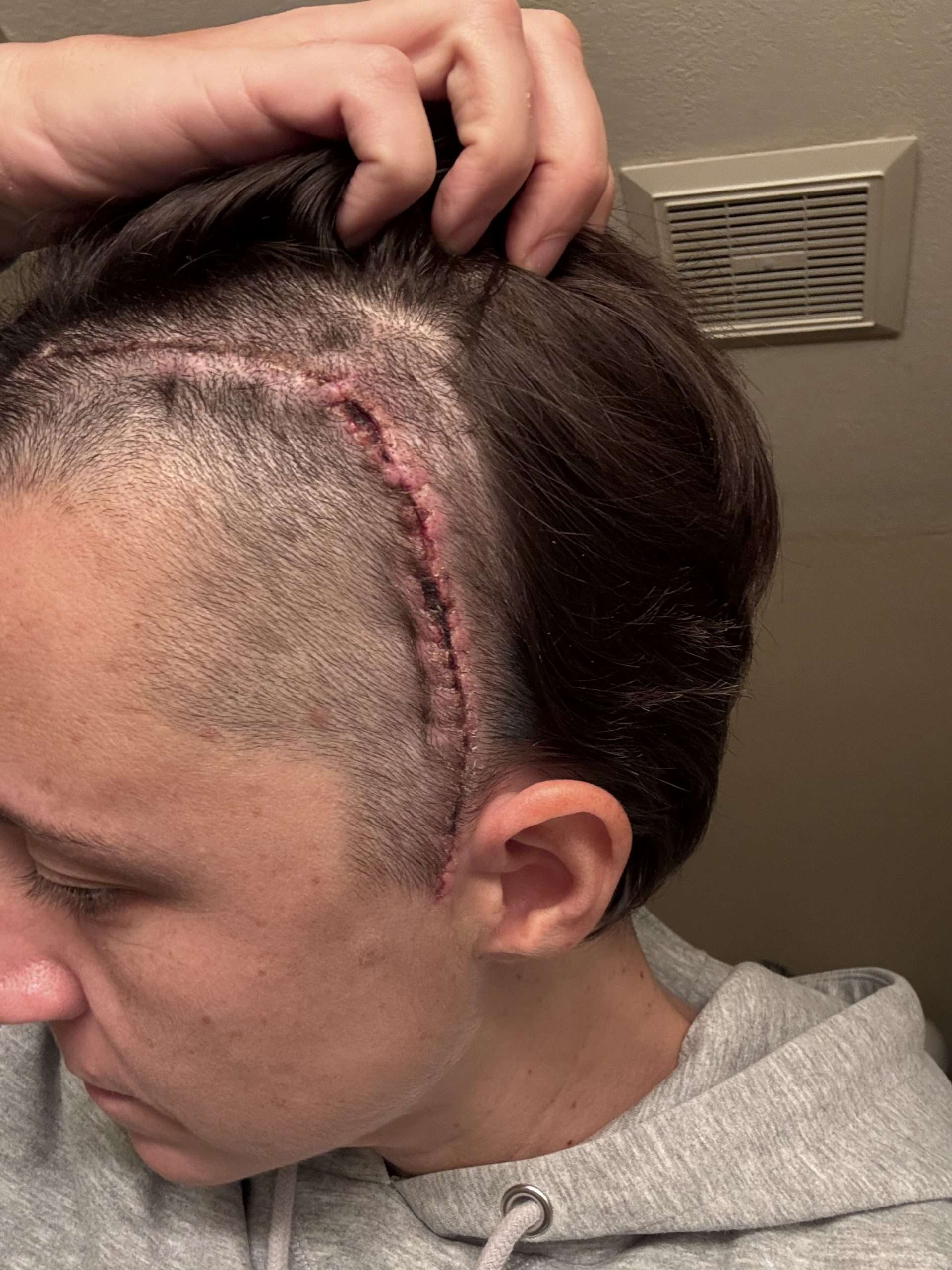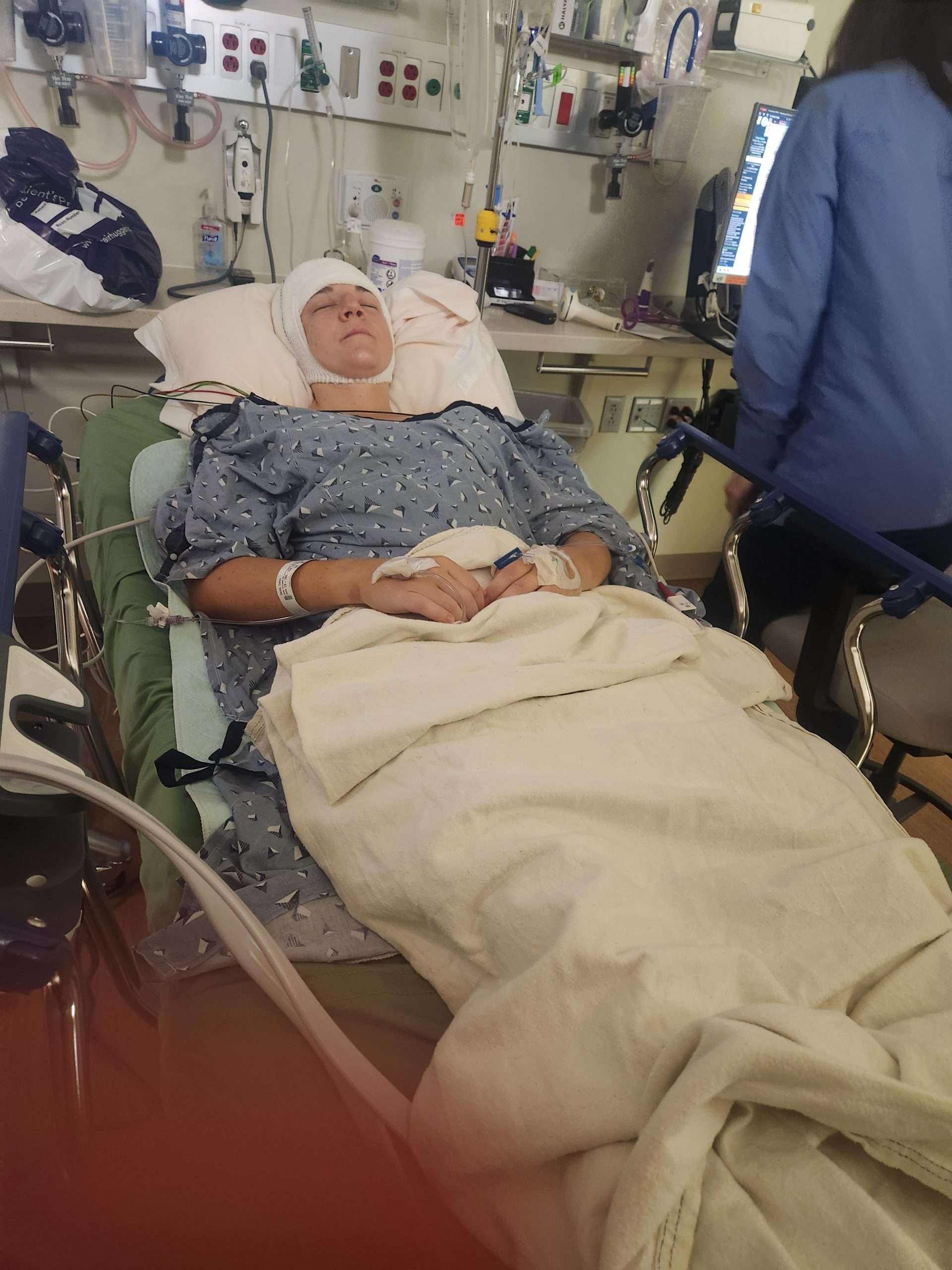
Thanks for letting me share my story! It’s really by the grace of God that I’m here today and sharing this with others is just as much of a gift to me as it (hopefully) will be for others that read it.
I’m an avid road cyclist; super active and typically ride about 150-200 miles a week. Back in September 2025, I had crashed on my bike and that crash is what got me to the ER at Mayo Clinic just to get a brain scan and make sure I was okay. I had fallen on my head and cracked my helmet so wanted to just take that extra precaution. Thankfully I was okay and didn’t even have a concussion but the scan did (incidentally) find a small 3.5mm brain aneurysm in my right carotid artery. Had I not fallen on my bike, I would have never known about this aneurysm.
After finding this, I was scheduled to have a CT Angiogram which is the highest quality imaging that can be done to get a 3D image of the aneurysm itself; it’s an outpatient procedure where they go in through your groin, feed a catheter and camera up to the area in your brain and get the imaging to see all of the aneurysms characteristics; location, dimensions, configuration, etc. so that the neurosurgery team can decide on the best approach for treating.
After the CT Angiogram was done in November of 2025, the neuro-surg team felt fairly confident this wasn’t a super emergent case given the small size and configuration; they basically advised that the rupture risk was low but something that should be taken care of in the next year or so.
Given my age and health, and just knowing I had this in my brain made me feel really anxious, nervous, and just stressed by the fact that anything could happen at any time so after living with this knowledge for 3 months, in February I had reached back out to my neuro surgery team and requested a consultation to talk about surgery, and I am so glad I did.
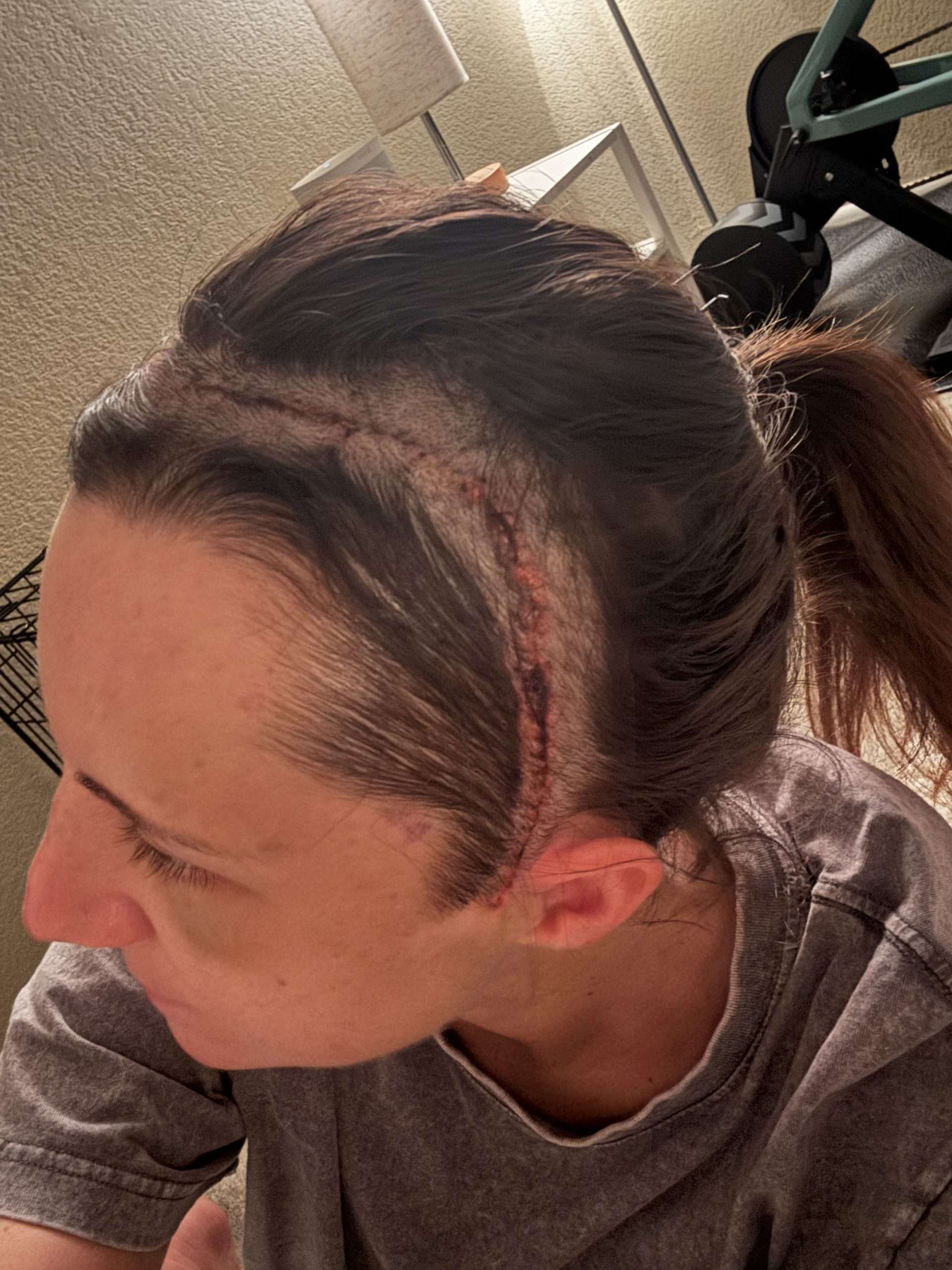
It was a lot to take in but I was essentially given three options: 1) monitor with scans every 3 months, 2) do a stenting procedure which is less invasive as they can go in through the groin as opposed to a full craniotomy or 3) craniotomy to complete a brain aneurysm clipping procedure; a titanium clip is inserted and left at the “stem” of the aneurysm to cut off blood flow and eliminate the risk of rupture. While I wanted to go with the less invasive approach, they shared that it was less successful and they recommended the full clipping procedure for a more promising outlook.
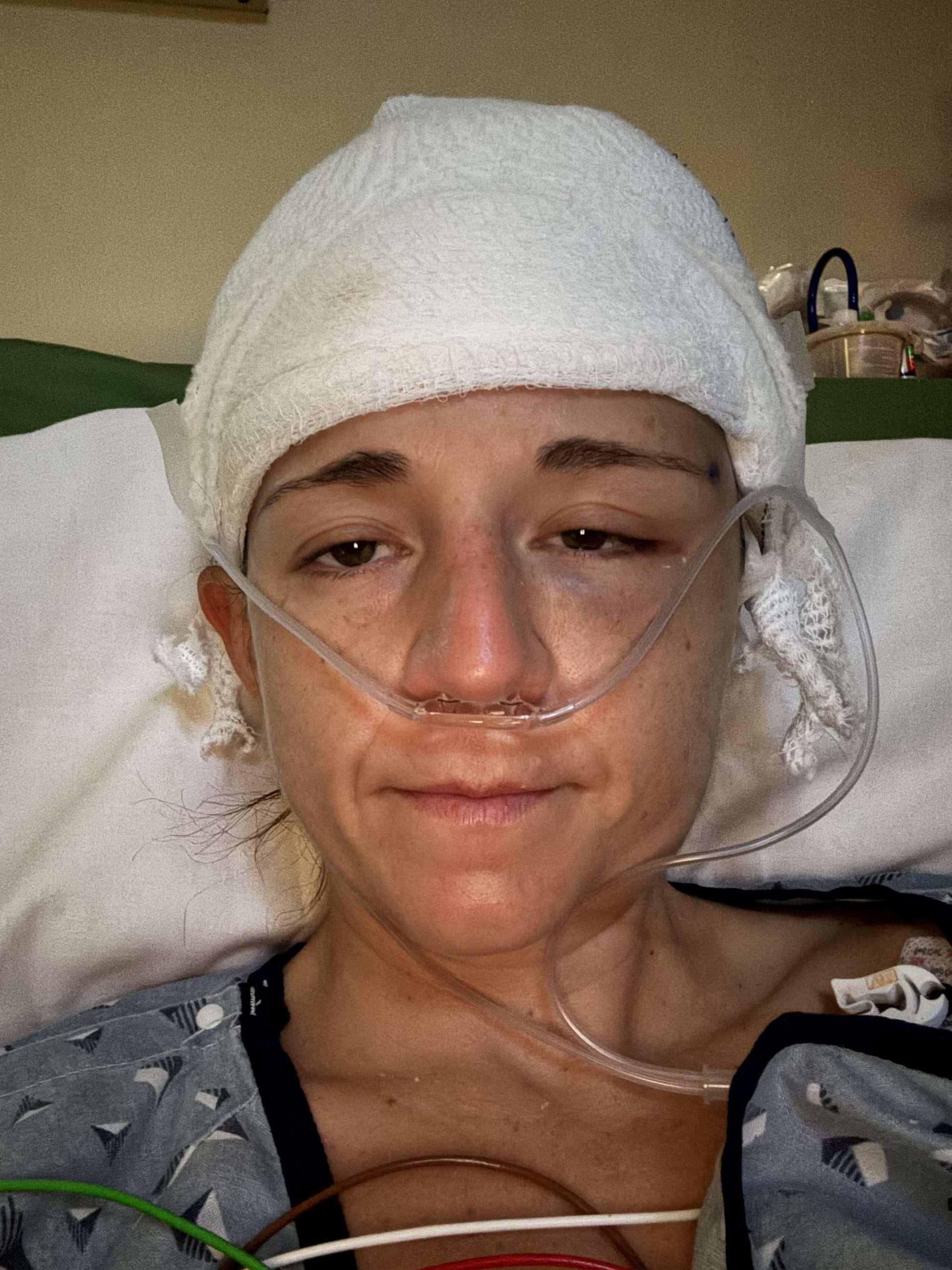
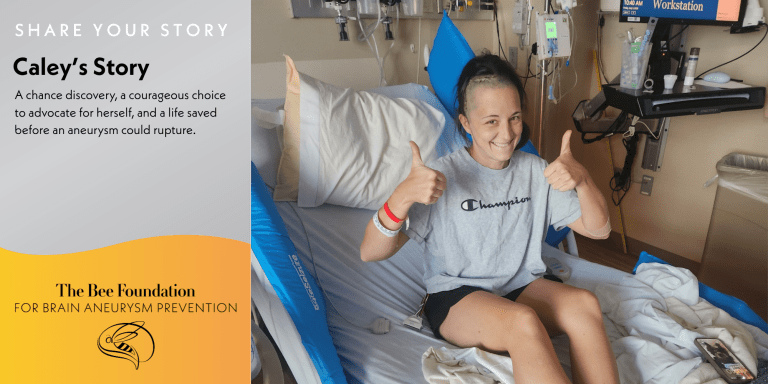
So after 4 more months of waiting, I finally had my surgery on June 22, 2026, and the first words out of my surgeons mouth after surgery were “It’s a good thing we went in when we did because the aneurysm was days away from rupturing.”. I’ll never forget that statement he shared with me and in that moment I was overwhelmed with emotion as it hit me that I was that close to losing my life.
The next two weeks were difficult as you can imagine dealing with the pain and some complications from the surgery itself but I’m now 18 days post-op today and starting to feel like myself again. Pain has subsided, energy levels remain low, but each day is better than the previous.
I truly believe that something good comes out of everything and it’s really all about perspective. It’s good that I fell on my bike that day back in September; had I not fallen, I likely wouldn’t be here. It’s good that I felt the stress and urgency to get this taken care of because as it turns out, the surgery saved my life.
I realize just how blessed my family and I am as too many people don’t get the opportunity to find this before it’s too late and that’s what’s so scary about aneurysms; they’re asymptomatic until it’s too late.
So in sharing my story and my journey, if I can provide anyone with the encouragement to be their own advocate and push for what you feel ls right, do it because it may just save your life.
Thank you to The Bee Foundation for spreading awareness for future prevention, sharing hope to those who need it, and for providing support to those who are impacted (both patients and their friends and family) by this life-altering thing.