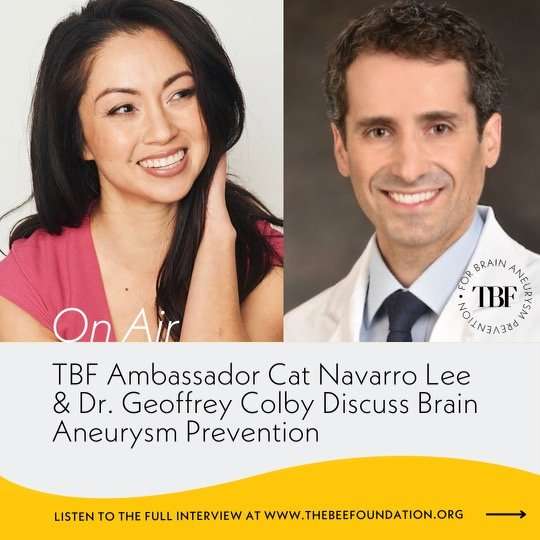
Recently, The Bee Foundation’s Awareness Ambassador, Cat Navarro Lee, sat down with Dr. Geoffrey Colby, a renowned neurosurgeon and a key figure in her personal brain aneurysm journey, for an insightful discussion on brain aneurysm prevention, advancements in treatment, and the power of community support. Cat, a brain aneurysm survivor herself, shared her gratitude for Dr. Colby’s expertise and the successful procedure that saved her life. Together, they dove into key aspects of brain aneurysm prevention and the importance of self-advocacy.
Understanding Brain Aneurysm Prevention
Dr. Colby highlighted the evolving landscape of brain aneurysm research, emphasizing the significance of both modifiable (e.g., hypertension) and non-modifiable (genetic) risk factors. As awareness and research progress, more sophisticated imaging techniques and diagnostic tools are emerging, allowing for earlier detection and better treatment options. He shared how the field continues to grow, and with each passing year, new technologies and treatments are being developed that offer hope for patients.
Cat shared her experience of undergoing a non-invasive procedure to treat her unruptured aneurysm. Reflecting on her journey, she expressed how grateful she is to have had access to such advanced treatment options, which weren’t widely available just a decade ago.
Patient Recovery and the Role of Support
One of the key takeaways from the interview was Dr. Colby’s insights into the struggles patients face in recovery, particularly distinguishing between the experiences of those with ruptured and unruptured aneurysms. For patients with unruptured aneurysms, the emotional toll—stress, anxiety, and fear—often becomes the most significant challenge. Meanwhile, for those recovering from ruptured aneurysms, cognitive and physical challenges can deeply impact their quality of life.
Dr. Colby emphasized the importance of organizations like The Bee Foundation in providing critical resources, community support, and advocacy. He also touched on the value of support groups, like the one he runs at UCLA, in connecting patients and offering them a platform to share their experiences and heal together.
Empowering Patients and Advocating for Prevention
Throughout the interview, both Cat and Dr. Colby stressed the importance of education and empowerment. As Dr. Colby said, “Knowledge is power.” He encouraged patients and caregivers to seek out expert information, advocate for themselves, and never be afraid to ask questions.
For those in the brain aneurysm community, the message was clear: You are not alone. There is power in numbers, and together, through advocacy, research, and support, we can make great strides in preventing brain aneurysms and improving outcomes for those affected.
Looking to the Future
With the interview wrapping up on an optimistic note, Cat and Dr. Colby discussed the exciting advancements on the horizon. From non-invasive imaging techniques to new intervention tools, the future of brain aneurysm prevention and treatment looks promising. And with community support, awareness, and continued research, there’s hope that more lives will be saved.
As we move forward, it’s interviews like these that remind us of the importance of spreading awareness and empowering individuals to take control of their health. Thank you, Cat and Dr. Colby, for your inspiring conversation and for being champions in the fight against brain aneurysms.
Stay tuned for more updates from The Bee Foundation and be sure to follow along with our mission to raise awareness and fund critical research. Together, we can make a difference!
#BrainAneurysmPrevention #BrainAneurysmAwareness #TheBeeFoundation #TBFCommunity #MedicalAdvancements #PatientAdvocacy #KnowledgeIsPower #Neurosurgery