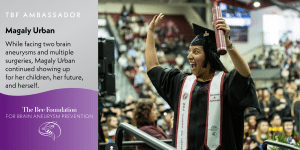
I lived my life for 32 years in a typical body, doing typical things, with a typical job. Life was cool. Sure, things could have been better, but I was stable, independent, and without great worries. My biggest concern was how to execute a healthy work-life balance properly. I had a thriving career in education as an assistant principal and was able to buy my first home, both significant accomplishments. I had everything I needed. Again, no one’s life is perfect, but I felt good.
In 2021, the year our world was slowly opening back up again, I started having headaches. I would take over-the-counter pain meds like Ibuprofen–multiple times a day in an attempt to lessen the pain–but they never helped. I started taking my blood pressure readings because I was aware enough to know my headaches were not “normal”. High blood pressure runs in my family, so it was something I wanted to be mindful of in conjunction with the headaches. I went a week or so with very noticeable headaches and thought, “Just stress from life.” On August 5, 2021, I woke up with that same headache. I contemplated whether to go to work, but my love–or obsession, depending on who you ask–for my job and welcoming new teachers onto the team pushed me to go in regardless of what I felt. I am still so very grateful I made that choice. A couple of hours into work, I felt a sensation that felt like a bang in my head.
I don’t think I need to rehash the start of a very complicated life for me–specifically as it relates to that day. That was the day I suffered a ruptured brain aneurysm. The bleeding on my brain was so severe that it is the primary cause of my physical disability today. A bleed that I am convinced did not have to go on as long as it did.
Here’s the thing: if I had to accept my new reality on its own, maybe I could, but I often think back to the day when I felt that terrible sensation in my head. The EMT worker did not think anything of my condition to get me to a hospital. In fact, he told me I likely just needed to, “Go to therapy because you work a stressful job.” Had he known what it meant for me to say I heard a felt that bang, maybe he would’ve decided to take me to the hospital at that very moment.
As hard as that day was, it was simply the start of an egregiously long recovery. You will always hear me say how blessed I am to be here, but I would be letting myself down if I wasn’t honest in naming everything that comes with still being here. It doesn’t feel like rainbows and butterflies every day. It actually feels really hard, and no matter how much progress I make, I always end up back at the starting line–not really the starting line, but backsliding nonetheless. There is progress and there is regression. I see the light at the end of the tunnel and it feels overwhelmingly dark. As a result of my rupture, I suffer from depression and ADHD, which both make recovery more complex for many reasons. Every few months, I am in my doctor’s office for routine Botox shots for the muscles in my right leg because they will not bend on their own or even when I force them. I have foot drop, and three years later (currently), I am recovering from a surgery that I had to have because of the condition. That day came and went, but this recovery is lifelong.
I’m lucky I had a rupture that did not kill me; however, my rupture took away significant parts of my life. Life as I knew it was gone, so now, I ask myself, how do I make this moment bigger than me? The answer to that question for me is advocacy.
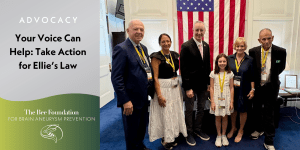
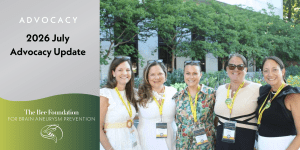
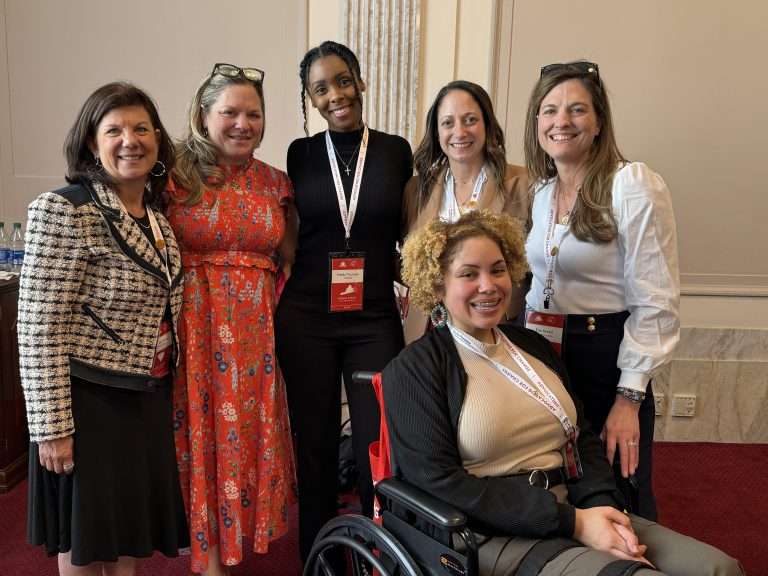
There is no one I can curse for experiencing what I experienced. There is no one thing I can turn to as the reason why I had an aneurysm that ruptured. There’s no quick fix or quick remedy to adjusting to life as a disabled woman. No extra money comes in to help me renovate my home to make it accessible for my new body or to make driving accessible for me. However, what I do have is my voice. Even though I cannot go back in time and change the trajectory of my situation, I can use my situation and voice to change the trajectory for others. THAT is what advocacy day on the Hill means to me.
It means giving a voice to those affected, like me, their families, and the people who were taken from us too soon. It means advocating for legislation that will save the lives of many people, no matter their political views, sexual orientation, race, or gender.
What if there was some medical way I could have known I had an aneurysm before the rupture? Instead of the paramedic giving me the advice to speak with a therapist, what if he had prioritized taking me to a hospital because he was trained to recognize the signs of a rupture, where they would have seen the brain bleed? Maybe they would have been able to get to my brain before it continued to swell, which left me unable to operate the right side of my body. I get angry because what if the emergency worker knew what to look out for in that critical moment he was with me?
Would my life be different today? Would some of the people we lost from a rupture still be here? How amazing would it be to put measures in place that identify someone’s aneurysm before it ruptures? Or, at the most basic level, to have medical professionals trained on the severity of this disease and the signs to look for in the moment.
I can’t do anything to make this right for me, but that doesn’t mean I can’t help others. As a survivor, I take it as one of my responsibilities to speak up for those who are coming behind me, who will survive, who will not survive, and who will live with debilitating injuries as a result of their rupture. I proudly take on the responsibility of speaking for those with unruptured aneurysms. Why? I don’t want them to end up like me. I don’t want anyone to spend their days after surviving feeling like they’re always in survivor mode, or not good enough, or insecure about every move they make or don’t make while also battling depression, ADHD, physical disabilities, and new cognitive deficits. It wasn’t that I survived, went home, and everything was hunky dory. No. Going home was when the battle really began. It is the battle I still struggle with today.
According to The Bee Foundation for Brain Aneurysm Prevention:
- An estimated 6 million people in the United States have an unruptured brain aneurysm, or 1 in 50 people.
- The annual rate of rupture is approximately 8 per 100,000 people or about 30,000 people in the United States suffer a ruptured brain aneurysm.
- There is a brain aneurysm rupturing every 18 minutes.
- Ruptured brain aneurysms are fatal in about 40% of cases. Of those who survive, about 66% will suffer some permanent deficit.
- There are almost 500,000 deaths worldwide each year caused by brain aneurysms and half the victims are younger than 50.
Join me on May 7th!
I wish you all love, peace, and an overflow of passionate advocacy!