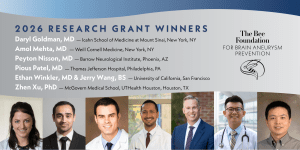
Dr. Nisson shares the latest progress from his team:
“Thanks in part to the generous support of the Bee Foundation, our team at Barrow Neurological Institute has completed a study investigating the uterus’s role in cerebral aneurysm formation — with compelling findings.
In a mouse model, females that underwent ovary-sparing hysterectomy developed significantly fewer aneurysms than those with the uterus intact (61% vs. 94%). We also observed a 36% reduction in circulating VEGF-A levels following hysterectomy. Notably, pharmacologic blockade of VEGF-A produced a similar protective effect, supporting the presence of a biologically meaningful signaling pathway.
Together, these findings suggest that the uterus may influence aneurysm risk through systemic VEGF-A signaling — a pathway that could potentially be targeted with medication in the future.
The manuscript describing this work has been completed and is being prepared for submission to a peer-reviewed journal. This research also lays the foundation for a planned NIH grant to further investigate this mechanism.
Brain aneurysms disproportionately affect women, and prior work has focused largely on ovarian hormones such as estrogen. Our findings point to the uterus as a previously under-recognized contributor, opening a new avenue for understanding and, ultimately, preventing this disease.”
Why This Matters
Brain aneurysms disproportionately affect women, yet the reasons behind this have remained incomplete. By identifying the uterus as a possible contributor, this research shifts the paradigm and opens the door to innovative prevention strategies that could one day save lives.
A Mother’s Day Message
Dr. Nisson reflects on the significance of this work:
“Brain aneurysms have long been known to disproportionately affect women, and for decades we believed estrogen alone explained that risk. Our research at Barrow Neurological Institute suggests the story may be more complex — the uterus itself appears to play a role in shaping vascular health.
On Mother’s Day, when we celebrate the women who have given us so much, it feels especially meaningful to be working toward a future where fewer mothers, daughters, and sisters are affected by a disease we are only beginning to fully understand. I’m deeply grateful to the Bee Foundation for their support in making this work possible.”
Looking Ahead
This research represents more than scientific progress, it’s a step toward protecting the lives of the women who mean the most to us. By continuing to invest in innovative, prevention-focused studies, The Bee Foundation is helping to change the future of brain aneurysm care.
This Mother’s Day, we honor not only the women in our lives, but also the researchers and supporters working tirelessly to safeguard their health.
To learn more about Dr. Nisson’s work, visit: https://thebeefoundation.org/dr-peyton-nisson-named-first-ever-annie-mirra-grant-recipient/
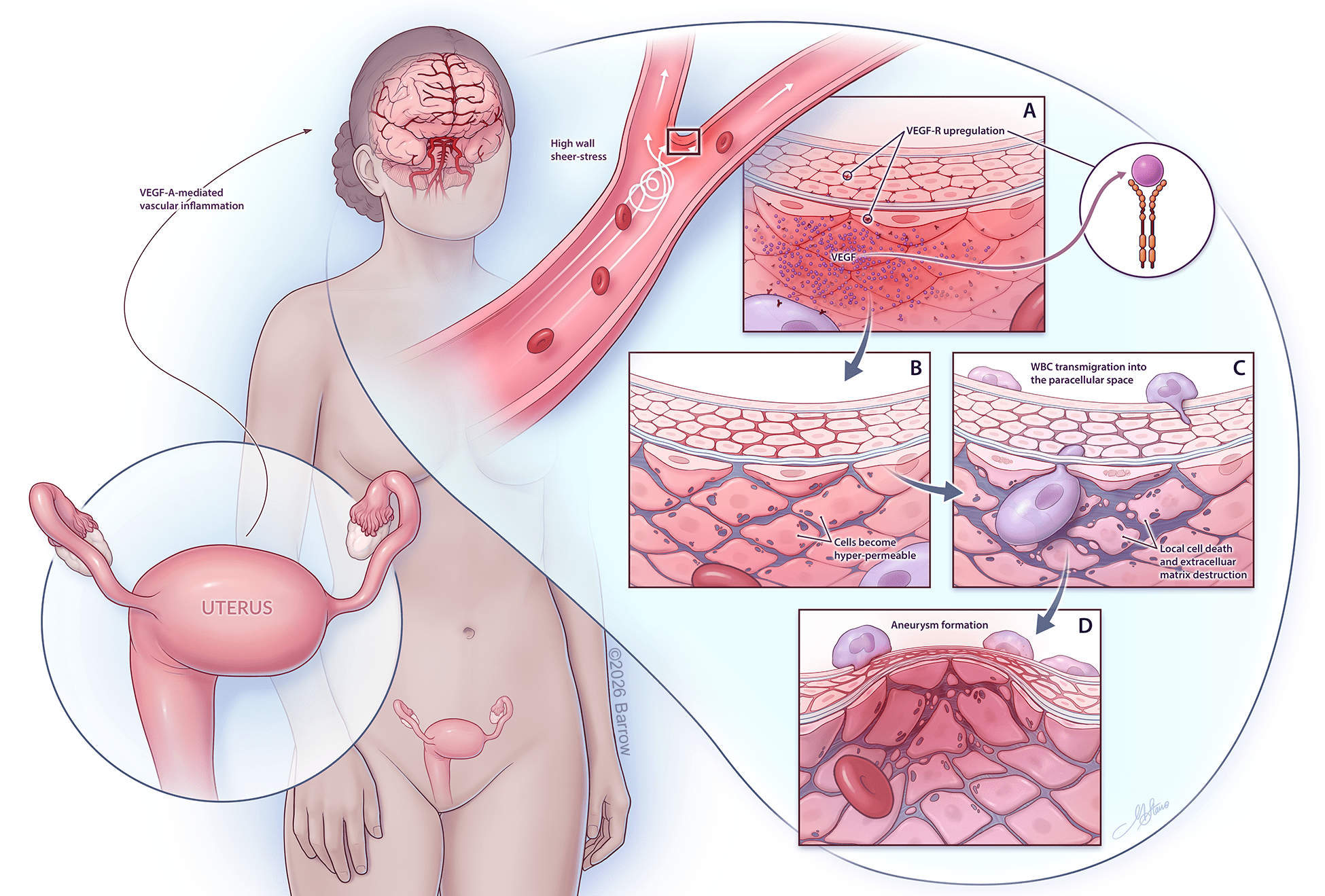
Depiction of the proposed pathway – circulating VEGF-A from the uterus traveling to cerebral vessels, where it may contribute to inflammation, vessel wall breakdown, and aneurysm formation.
Illustration courtesy of Barrow Neurological Institute.