The Bee Foundation is proud to celebrate a major milestone in the advancement of brain aneurysm research and global health equity.
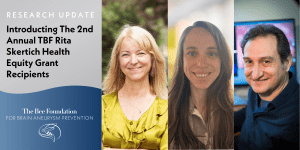
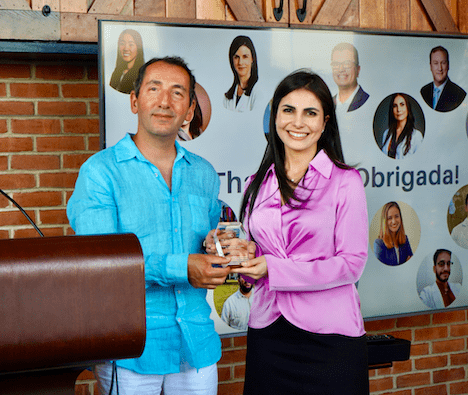
Dr. Natália Vasconcellos, recipient of the Rita Skertich Health Equity Research Grant, was honored to present the preliminary results of her groundbreaking study—SAHV-BRAZA (Subarachnoid Hemorrhage Volume – Brazil and Americas)—at the prestigious Innovations in Cerebrovascular Science Conference in Jacksonville, Florida.
When a brain aneurysm ruptures, causing a subarachnoid hemorrhage (SAH), the amount of bleeding plays a critical role in patient’s outcome—more blood means higher risks of complications like vasospasm and delayed cerebral ischemia. Currently, neurologists and neurosurgeons rely on visual, non-quantitative scales to estimate blood volume after SAH, which are important tools, easy-to-use, however, only moderately accurate.
The US-Brazil collaborative study aims to validate a new scoring system that combines clinical data with blood volume measurements. The goal is to improve prognostic accuracy, guide clinical management, communication among medical teams, and build stronger foundations for future global research.
While artificial intelligence (AI) can rapidly analyse blood volume, this collaborative multicenter research focus on validating a simple, practical tool that works equally well in high-resource hospitals and underserved communities. This isn’t just about innovation; it’s about closing gaps in care worldwide.
Uncovering Hidden Disparities
Additionally, with data from 1,500 patients across 4 different hospitals, this study also investigates how social determinants of health—such as gender, race, and ethnicity—impact outcomes after SAH. For instance:
- Women are more likely to suffer SAH—but do they face worse recovery rates?
- How do racial and ethnic disparities influence survival and long-term health? (Current evidence is surprisingly limited and conflicting.)
Because both the U.S. and Brazil are diverse, multiethnic nations shaped by immigration, this collaboration provides a unique opportunity to explore these critical, unresolved questions—helping pave the way for more equitable care in neurovascular medicine.
We extend our sincere gratitude to:
- Dr. Natália Vasconcellos, for her leadership, vision, and tireless commitment to health equity in neurovascular care.
- Dr. William Freeman of the Mayo Clinic, whose mentorship has helped guide this vital research.
- Elizabeth Ratta, for establishing the Rita Skertich Health Equity Research Grant, which continues to empower emerging leaders in this field.
Preliminary Results
The research team hypothesized that combining consciousness levels with detailed blood volume measurements—both total and regional—could significantly improve outcome predictions for SAH patients.
In this preliminary study of 500 patients across the U.S. and Brazil, the results were striking:
- 82% overall accuracy in predicting outcomes
- Superior specificity for identifying poor/unfavorable outcomes compared to existing models
- Performance comparable to advanced machine learning systems that use blood volume quantification.
Why does this matter?
- “Volume matters!”—The study confirms that blood measurement is critical for accurate prognosis.
- Unlike complex AI tools, this model is low-cost, easy to use, and accessible for hospitals worldwide—from high-resource centers to underserved communities.
With these promising results, the team is now working to expand validation and bring this practical tool to frontline clinicians.

Impact: Better predictions leeds to better care
Accurate prognostication in SAH is critical, it ensures patients receive the right level of care while optimizing hospital resources. With precise outcome predictions, physicians can confidently identify stable patients who may benefit from earlier discharge, reducing unnecessary hospital stays, costs, and risks, like secondary infections. On the other hand, high-risk patients can be quickly identified for more aggressive monitoring and intensive treatment, improving their chances of recovery.
Beyond clinical benefits, this approach allows for healthcare providers to allocate time and resources more efficiently. Additionally, it foster clearer communication between doctors and families. Good scientific evidence help doctors to explain families and patients what to expect in the days or weeks ahead. The family is then able to make an informed decision and plan accordingly, whether that means organizing a safe return home or arranging end of life care.
These results can help tailor the level of attention and monitoring each individual patient requires. This model also holds the potential to predict both mortality rates and long-term outcomes, all while simultaneously reducing unnecessary costs. It has a low-cost, user-friendly design, and it can be a win for patients, families, and healthcare systems alike.
Stay tuned for more updates as the SAHV-BRAZA project continues to unfold and drive forward. The Bee Foundation’s mission to prevent brain aneurysms through innovative research, awareness, and community impact.