By: Leslie A. Miller, PhD
Aneurysm Rupture Survivor
On June 8, 2021, my life changed in an instant. A sudden brain aneurysm rupture led to a hemorrhagic stroke-an event that shattered everything I knew. In a matter of moments, I went from living my life to fighting for it. What followed was not just a medical crisis, but the beginning of a long, unpredictable recovery journey that no one could have prepared me for.
I survived, but not in the way I expected.
I remember that June 8 evening clearly, as if it plays on a loop in my mind. It was the third night of our annual family vacation around 9 PM. We were gearing up for our much-anticipated Not So Newlywed game. My husband and I had prepped for it all year, filling an oversized bottle with change as the prize. The questions—fun, flirty, a little embarrassing—were ready.
While waiting on the others, my husband and I — along with our daughter and her husband — decided to do a test round. Our eldest grandson read the first question: “When was the last time you made whoopee?” We laughed, scribbled our answers, and when all four whiteboards revealed “Today,” we burst into laughter.
And then it hit.
A sudden, searing pain at the base of my skull—like a sword shoved up through my neck. Eyes wide, jaw clenched, I took a breath and stood, trying to stay calm.
In the bathroom, I fumbled for Tylenol, swallowed two, and returned to the living room. My body trembled. I was flushed, nauseous. I sat down, trying not to meet anyone’s eyes—afraid that if I did, this would all become too real.
“What’s happening to me?” I wondered. Too much wine? Low blood sugar? But nothing fit. The pain was unbearable—tight, blinding, like my skull was caught in a vice. My stomach flipped. My vision blurred. I was slipping.
Someone asked, “Are you okay?”
“No,” I said, sliding to the floor, curling into a ball. “I need to lie down… I think you should call 911.”
For years after, I’d describe it the same way: the worst headache of my life. Sudden. Explosive. Unrelenting.
The next hours were a blur—flashing lights, sirens, tests, questions. Then, the roar of helicopter blades as I was airlifted from the local hospital to a hospital equipped to handle what came next: a cerebral angiogram, then brain surgery—a craniotomy to clip the aneurysm.
Hours became days, days became weeks. And finally, three weeks later, I was discharged from the hospital bed that had become my whole world.

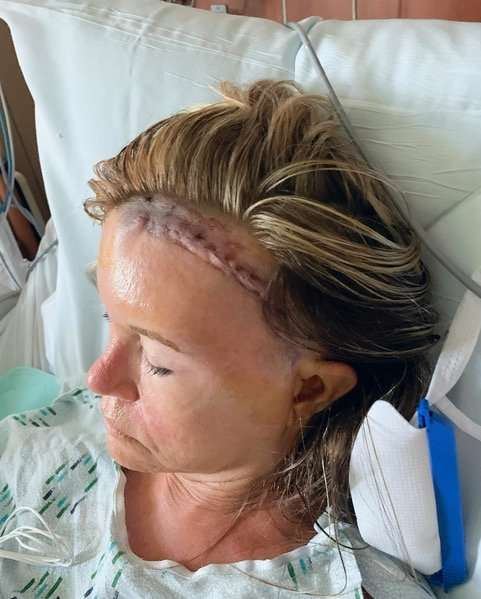
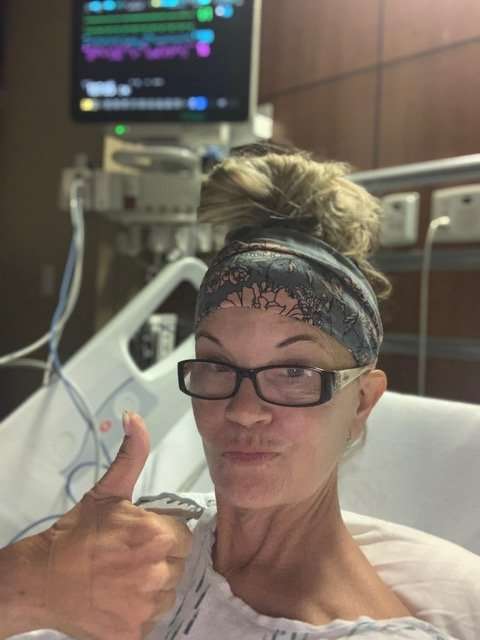
When I was discharged from the hospital, I thought I was on the path back to normal. I expected some discomfort, some fatigue-maybe a few months of rest before returning to life as I knew it. But instead of healing, I stepped into a world filled with invisible wounds-debilitating brain fog, unpredictable emotions, hypersensitivity to sound, and a haunting sense of disconnection from who I used to be.
The hardest part-no one truly understood. I looked fine. I could walk, talk, and carry out my daily routines. To the outside world, I appeared “recovered”, but inside, I was struggling deeply. And the most disheartening reality of all: I was discharged with nothing. No road map, no resources, no warning about what might come next. No referral or support groups, not even a conversation about what I might experience cognitively or emotionally. Even with the unwavering support of my husband, I felt utterly alone-lost in a storm no one else could see.
That is why this program matters.
Today, I am honored to help launch AdventHealth Inpatient Rehabilitation’s Peer Support Program in Winter Park, FL. An initiative built on compassion, connection, and lived experience. I am proud to be the first trained volunteer in this groundbreaking program, which pairs rehabilitation patients who have experienced a brain aneurysm rupture and other types of brain injuries with others who have walked this road before them.
AdventHealth knows that healing is not just physical. It’s emotional, it’s mental, it’s social, and when those unseen wounds are ignored, people fall through the cracks. This program exists to change that. Peer support means no one has to navigate the unknown alone. It means real conversations with real people who get it. Trained volunteers like me offer more than comfort, we offer truth, tools and hope. We share what helped us, what we wish we had known and where to find real support in the early, overwhelming days after discharge.
We provide each patient we meet with a Recovery Packet filled with curated resources, support group information, practical guides, and tools we personally used (or desperately needed) when we first came home after hospital discharge. The healing journey doesn’t end when you leave the hospital. In many ways, it begins there.
I look back over the past 4 years and see just how far I’ve come, from paralyzing isolation and despair to rediscovering purpose and strength, and resilience. This program is my way of turning pain into purpose. It’s a chance to reach back, extend a hand, and walk alongside others as they begin their own path forward.
To anyone facing recovery, you are not invisible, you are not alone, we see you, we believe in you and we are here for you every step of the way.