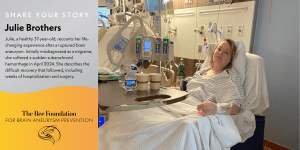
In January 2024, I thought I was battling Long Covid. I was trapped in a cycle of exhaustion that no amount of sleep could fix, haunted by a persistent, dull headache that had lingered since November. To keep up with my demanding job and hour-long daily commute, aspirin had become a mandatory part of my morning regimen.
By April, feeling completely depleted, I visited my primary care physician to request a work- from-home note. Given my family history—my grandmother suffered a brain aneurysm in her 50s and spent two decades in a nursing home, and two other maternal relatives died from aortic aneurysms—my doctor suggested an MRA to study the blood vessels in my brain. That Sunday night, I got the call: I had an aneurysm. While it hadn’t ruptured, the situation was urgent. Within three weeks, I was scheduled for surgery.
The gravity of the situation didn’t truly hit me until a few days later; while taking my dog to the park, my vision suddenly blurred, leaving me blind in one eye. It was my only “real” warning sign—the one I couldn’t attribute to stress. I feel incredibly fortunate to have been in the hands of a brilliant neurosurgeon who not only saved my life but navigated the surgery with such care that I didn’t even have to lose my hair. The recovery took three months physically—navigating facial muscle healing and a stiff jaw— but the mental shift was permanent. The fear that once held me back vanished.
I finally took the leap into a new remote career that I had been too afraid to pursue before surgery. Today, I take everything in stride. I’ve learned that when you’ve faced brain surgery, you stop sweating the small stuff. I like to think I am living the vibrant, full life that my grandmother was denied. Every day I spend stress-free and happy is a nod to her.